"Worthy"

Rev. Essie Koenig-Reinke

When I was 22, the rose-colored glasses through which I viewed my childhood church melted away. I spent that summer interning in the youth department—a dream working with friends and hanging out with teenagers. However, what I loved most was reconnecting with my friend Kenneth.
Kenneth and I met in 2008 on Youth Sunday. Exhausted after a choir lock-in, my friends and I were laughing to cover our fatigue when a man approached us. His black skin and dirty clothes looked entirely out of place in our sanctuary as he thanked us for the service and hobbled away on a cane. We were not unkind, but we were teenagers, caught up in our own world and not as gracious as we should have been.
I thought about him all week. The next time I saw him, I introduced myself, and our friendship began. Every coffee hour, I would find Kenneth. At the end of my senior year of high school, he gifted me a small trinket of a Black preacher that still sits on my desk. He wrapped it in the only scarf he owned—a scarf I still keep and wear whenever I need to remember him.
The parable we read today from the Gospel of Matthew is jarring. While Luke turns this story into a comforting fluff piece, Matthew includes every harsh detail. To understand why, we must look at the specific lens of this Gospel. Matthew is the social justice gospel. The tone in this gospel is like John the Baptist: direct, unflinching, and rough around the edges. Matthew proclaims the truth without sugarcoating it. The author addresses the Roman Empire and the wealthy and powerful religious leaders more than any other evangelist, intentionally drawing a sharp line between the broken world that exists and the just world God proclaims.
This parable of the wedding feast falls within a series of teachings about the Kingdom of Heaven. Usually, Jesus describes the Kingdom for those society has forgotten—comparing it to lost sheep, lost coins, or women making bread. But this specific story is explicitly directed at the powerful, privileged and wealthy: the synagogue leaders, the Pharisees, Sadducees, Synagogue patrons and the Roman authorities. To add insult to injury, Jesus tells these stories in public spaces where those very leaders can hear him, rapidly building the tension that leads to his arrest.
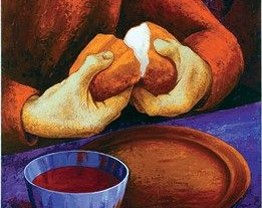
The story casts a powerful King who throws a wedding banquet for his son. He invites his rich, influential friends, but they "take it lightly" and refuse to attend. Infuriated, the King has them killed, burns their city, and sends his slaves into the streets to invite those on the edge of the community. In the ancient world, the edge of the city was reserved for the invisible and marginalized: the sick, the disabled, the poor, orphans, immigrants, and outcasts. They are the ones who fill the banquet hall. Yet, when one guest shows up without the proper wedding attire—entering the space disrespectfully—he is cast into the outer darkness.
This story reads more like an original Grimm’s fairytale than a sanitized Disney version. Matthew is issuing a dramatic warning to those who carry privilege and power. He is declaring that those who choose their own wellbeing, comfort, and status over the invitation to God’s table will miss out entirely on the fullness of the Kingdom. It is a radical invitation, but it is also a reminder that accepting this invitation is a serious, transformative commitment that can never be taken lightly.
The summer I worked as a youth intern, Kenneth and I would sit outside on the church benches early in the morning to talk. We had missed our weekly chats during my college years, and spending that time with him was a gift. As the summer came to a close, I knew I wanted to spend my final Sunday with him. I asked for permission to take the Sunday School hour off so I could attend the main worship service as a congregant.
I met Kenneth in the Narthex before the service started. I looked at him and asked, “Hey, can I sit with you today?”
In that exact moment, my life changed. Kenneth began to cry. He looked at me and said that in all the years he had attended, no one had ever asked to sit next to him. Kenneth usually sat unnoticed in the very back row, but that day, we walked down the aisle and sat together in the front row. I held the hymnal for us because his hands shook too badly from his ailments to hold it himself. Afterward, he cried as he said thank you, and I cried as we said goodbye.
Here is the hard truth: Even the church gets it wrong. There is a profound difference between merely allowing visitors into your space and truly welcoming them. There is a massive gulf between putting a statement on your sign saying you welcome all people regardless of their life circumstances, and actually embracing a human being as a vital part of your community.
Those of us sitting in these pews can easily become complacent. If we were characters in Matthew’s gospel, most of us would not be the outcasts waiting on the edge of the city for an invitation. We are the first round of invitees. We are the ones who are already comfortable, the ones who fit into the culture of this community, and the ones who natively belong. Because of that comfort, we are the ones most at risk of taking the invitation lightly, failing to notice the fullness of God’s diverse table right in front of us.
I know that this is a difficult historical moment to be the church. But it has often been hard to be the church. It was hard in the early centuries when Christians were actively persecuted and forced to worship in clandestine, shadowed spaces. It was a difficult time when colonizers arrived on this continent and forced Indigenous children into boarding schools to make them more palatable to white, Western European Christians. It was a difficult time during the Civil Rights movement, when moderate white congregations were forced to choose between the safety of complicity or speaking out for their Black siblings.
Today, so many congregations fall into the paralyzing fear of survival. We worry about our future, and when we circle the wagons and act out of fear—fear of closing, fear of dying, fear of changing—we inadvertently close our doors. In doing so, we ignore God's active invitation to the heavenly banquet.
My friend and colleague, Bruce Reyes-Chow, is frequently asked by struggling congregations: How can we grow our church? How can we double our attendance? How can we get people to pledge more money? How do we get young people into our pews?
Rather than offering a shallow, five-point marketing plan, Bruce tells his audiences the truth: there are countless societal factors dictating why people do or do not attend church, and the vast majority of them are entirely out of our control. There is no magic pill or universal strategy for institutional growth. Rather than wasting your collective energy obsessing over what you cannot control, focus entirely on what you can. Discern deeply how your specific faith community is uniquely called to follow Christ right here, and right now.
I think of the Rio Grande Food Project, born from a small church; Second Presbyterian, ensuring Spanish speakers have a place to worship; and St. Andrew, hosting Sunday lunches for their neighbors. I think of us, and the women who started A Child’s Garden to support young families.
There are times we have accepted God’s invitation with faithful hearts. But the deeper truth is that the invitation is extended over and over again—each time a visitor arrives, someone asks for help, or we choose love over fear. Each time we discern a new vision statement or Strategic Plan. This invitation is not a one-time ask, but a choice we get to make as the church over and over again.
And so, beloveds, how is this church called to follow Christ? May we seek the invitation to God’s table with open and honest hearts. Amen.